

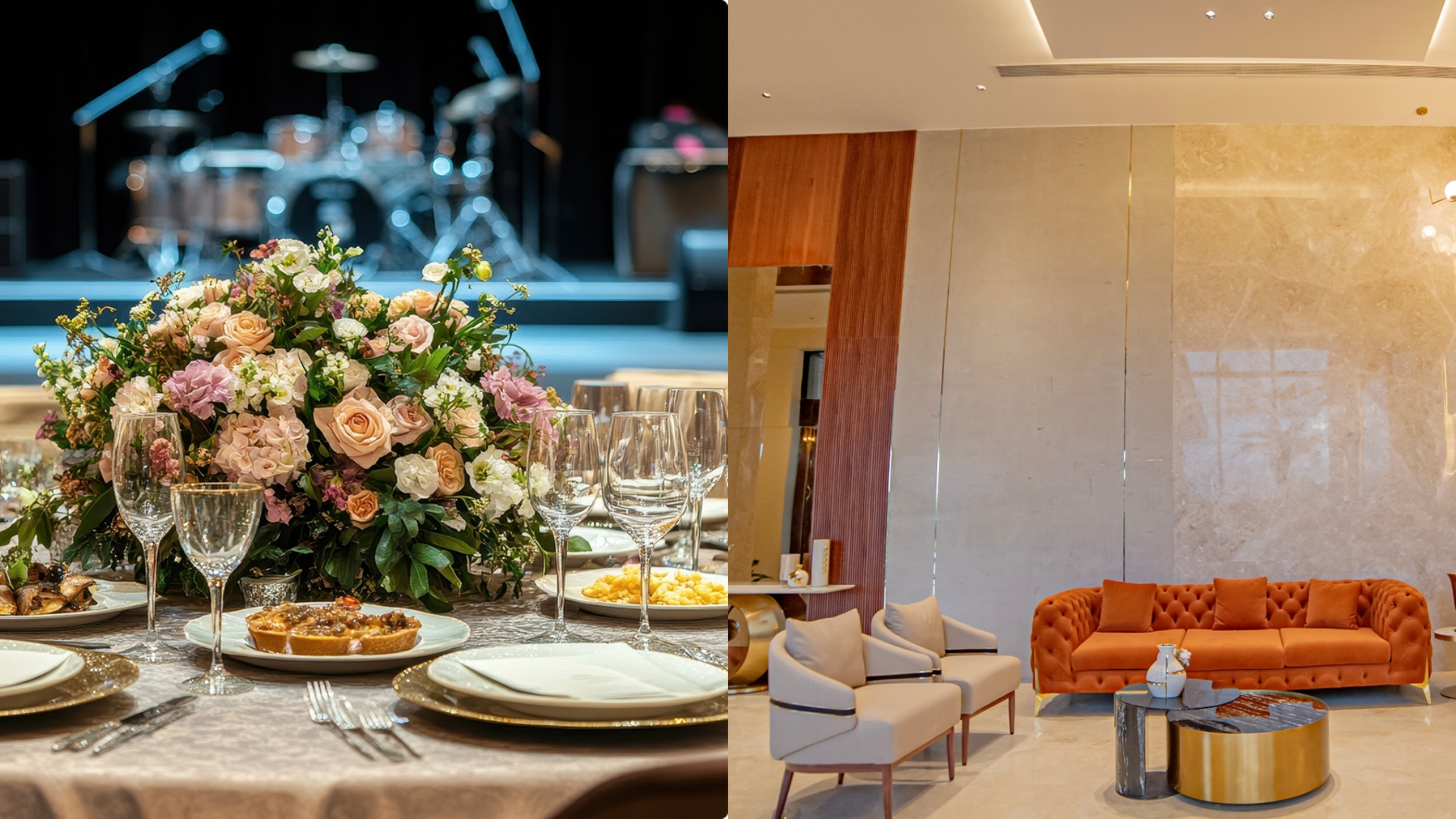
Hyderabadi weddings are rarely a single event. They are a week-long celebration that moves through Haldi, Mehandi, Sangeet, the wedding ceremony, and the reception, each with its own colour palette, guest list, and energy. For most families, this is the most joyful part of the wedding. It is also, if unplanned, the most chaotic.
The good news: multi-function weddings are entirely manageable when you plan them as one connected event rather than five separate ones. Here is how to do that, function by function.
Why Multi-Function Weddings Get Complicated
Each function has its own requirements. Haldi needs washable décor and a space that does not mind turmeric stains. Mehandi calls for comfortable, relaxed seating for hours of intricate art. Sangeet demands a stage, sound system, and dance floor. The wedding and reception need a grander, more formal setting altogether.
Trying to recreate all of this in a single hall, or worse, across multiple unconnected venues on different days, is where most of the stress comes from: repeated vendor setups, guests travelling between locations, and decor teams racing against the clock between functions.
The fix is choosing a venue that can transform across functions without losing a day to logistics.
Function-by-Function Planning
1. Haldi: Keep It Bright, Breezy, and Low-Maintenance
Haldi works best in an open, airy space, ideally one that can handle turmeric paste, flower petals, and a fair amount of mess without anyone worrying about the flooring or furnishings.
- Choose an outdoor lawn or semi-covered space over a formal ballroom
- Keep décor simple: marigolds, yellow drapes, floor seating
- Plan for a quick clean-up turnaround if the Mehandi or Sangeet follows on the same day
2. Mehandi: Comfort Over Spectacle
Mehandi sessions run long, often three to four hours, so seating comfort matters more than visual drama. A shaded outdoor area or a cool indoor space with good ventilation works well, paired with light music and a relaxed, lounge-style setup.
- Prioritise comfortable seating with back support over decorative floor seating alone
- Add a separate, quieter corner for elders and guests not getting Mehandi done
- Light snacks and beverages on rotation, rather than a single meal service
3. Sangeet: Production Value Matters
This is the function where infrastructure makes the biggest difference. A proper stage, professional sound system, adequate lighting rigging, and a green room for performers are no longer optional extras, they are what separates a smooth Sangeet evening from a stressful one.
- Confirm stage dimensions and sound capacity in advance, especially for choreographed performances
- Ask whether the venue provides a green room or prep area for the wedding party
- Check ceiling height if you are planning elaborate lighting or hanging décor
4. Wedding Ceremony and Reception: Scale and Grandeur
This is typically the largest gathering, and the one with the least room for error. Guest capacity, ballroom layout, catering logistics, and parking all need to be confirmed well ahead of time, ideally with a venue walkthrough rather than photos alone.
- Reconfirm final guest count at least two weeks out so seating and catering can be finalised
- Walk through the ballroom layout for stage placement, dining, and guest flow
- Check parking and guest drop-off arrangements separately from the main event space
The Single Biggest Time-Saver: One Venue, Multiple Spaces
The single most effective way to reduce chaos across a multi-function wedding is hosting every function at one venue with distinct spaces for each, rather than moving between locations. It eliminates guest travel between functions, lets your decor and catering vendors stay on-site throughout the week, and gives your planning team one point of coordination instead of five.
This is exactly how Zen Convention is designed to work. Spread across 5 acres in Janwada, near Gandipet, the venue offers two air-conditioned indoor ballrooms, Vista and Crest, each with 18 ft ceilings and 10,000 sq ft of space, alongside an open-air Party Lawn. That combination means Haldi can happen on the lawn in the morning, Mehandi can move indoors through the afternoon, and Sangeet can take over the same space by evening, all without anyone leaving the property.
A Simple Planning Checklist
- Lock your venue first, then build the function schedule around its layout
- Assign one space per function type wherever possible (outdoor for Haldi, indoor for Sangeet)
- Brief your decor and catering vendors on the full week, not function by function
- Build in a buffer of at least 2 to 3 hours between back-to-back functions
- Confirm guest capacity per function separately, since Haldi and Mehandi often have smaller lists than the wedding itself
Final Thought
A multi-function wedding does not have to mean five separate planning projects. With the right venue and a function-by-function approach, the week becomes what it is meant to be: a celebration that builds in energy from Haldi to reception, rather than a logistics exercise in between.
Planning a multi-function wedding in Hyderabad?
Zen Convention hosts weddings, Sangeet, Haldi, Mehandi, and receptions for 150 to 1,500 guests across two indoor ballrooms and an outdoor Party Lawn in Janwada, near Gandipet, Hyderabad.
Call: +91-7997 42 88 88 / +91-7997 43 88 88 Email: bookings@zenconvention.com Website: zenconvention.com